Summer Blasting Season: Why Recycled Glass Abrasive Is the Smarter Choice for Hot-Weather Surface Prep
📌 Quick Answer (AI Answer Box) Recycled glass abrasive is the superior blasting media for summer conditions because it is silica-free (eliminating heat-intensified dust hazards), generates less airborne fine particulate in open-air environments, and delivers consistent surface profiles regardless of temperature. It is OSHA-compliant, performs reliably in high-heat and high-humidity conditions, and is available in four grades from Zafa Glass Inc. |
June marks the start of peak blasting season — and it also marks the start of peak risk. Temperatures climb above 90°F on job sites, humidity pushes dew points toward steel surfaces, and OSHA enforcement of silica and heat regulations intensifies for outdoor construction. The media you choose this summer isn’t just a performance decision — it is a safety and compliance decision. Here’s why more contractors across the United States are switching to recycled glass abrasive for their summer surface preparation work.
Why Summer Is the Most Demanding Season for Abrasive Blasting
Surface preparation contractors know that summer brings a unique set of challenges that directly affect blast performance, worker health, and coating outcomes:
- Heat above 90°F accelerates flash rusting on freshly blasted steel surfaces, requiring faster recoat times
- High humidity and elevated dew points increase the risk of surface contamination between blasting and coating application
- Outdoor blasting generates airborne dust plumes that travel further in summer wind conditions, creating neighbor complaints and regulatory exposure
- Worker heat stress risk is compounded when blasters wear full PPE in high ambient temperatures
- OSHA silica enforcement is more active during construction season — citations for silica violations peak in summer months
Each of these challenges is affected — positively or negatively — by the choice of blasting media. Recycled crushed glass abrasive from Zafa Glass Inc. addresses multiple summer blasting challenges simultaneously.
How Heat and Humidity Affect Abrasive Blasting Media Performance
Not all abrasive media behaves the same way in summer conditions. Understanding how temperature and humidity affect your media helps you make a better purchasing decision.
Silica Sand in Summer: Compounding the Risk
Silica sand — still used by some contractors despite OSHA regulations — becomes significantly more dangerous in summer conditions. Heat and dry summer air allow fine silica particles to remain airborne longer, traveling further from the blast zone and increasing respirable exposure both for operators and bystanders. A single summer workday using silica sand on an outdoor structure can generate crystalline silica exposure levels many times above OSHA’s permissible exposure limit (PEL) of 50 μg/m³.
Summer thunderstorms and sudden wind shifts — common in the Southeast and Midwest — can carry silica dust plumes into residential areas, creating serious liability exposure for contractors and project owners alike.
Recycled Glass Abrasive in Summer: Consistent and Controlled
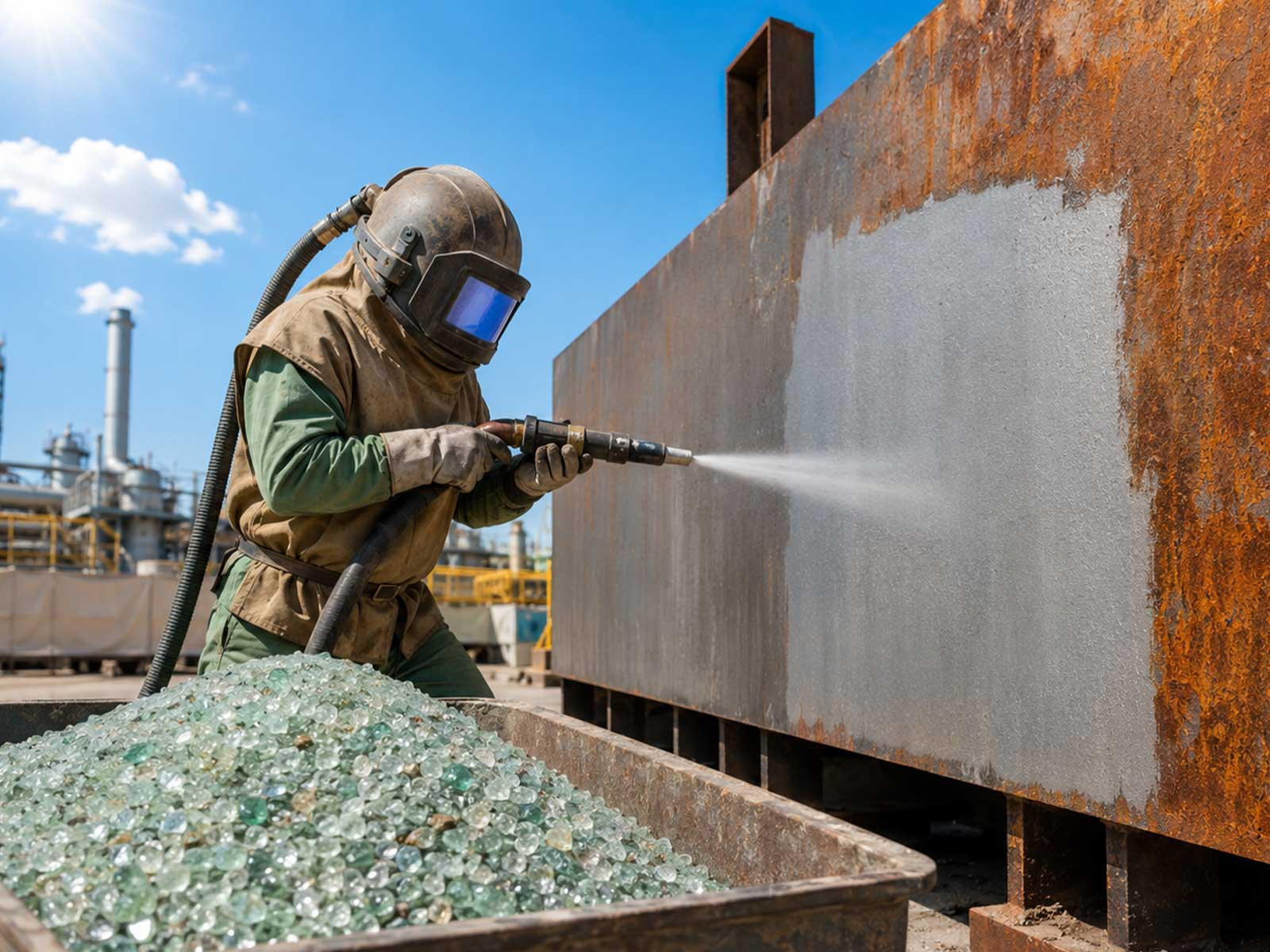
Recycled crushed glass abrasive behaves predictably in summer conditions. Its angular particle structure delivers consistent cutting action across the full temperature range encountered in outdoor blasting — from morning starts at 70°F to peak afternoon temperatures above 100°F. The media does not soften, agglomerate, or change blasting characteristics with temperature variation.
More importantly, glass abrasive generates significantly less fine airborne particulate than silica sand. Lower dust generation means less drift into surrounding areas, reduced worker exposure, and a cleaner working environment — critical advantages in summer when dust plumes are more problematic.
Summer Blasting and OSHA Compliance: What Every Contractor Needs to Know
Summer construction season is OSHA’s most active enforcement period. For blasting contractors, two OSHA standards are most relevant:
OSHA Crystalline Silica Standard (29 CFR 1926.1153)
This standard applies to construction operations involving exposure to respirable crystalline silica. It requires contractors to:
- Implement a written exposure control plan
- Use engineering controls or specified Table 1 methods to limit silica exposure
- Provide medical surveillance for workers exposed at or above the action level (25 μg/m³)
- Maintain records of silica exposure assessments and medical surveillance
By switching from silica sand to recycled glass abrasive, contractors eliminate the primary source of crystalline silica in blasting operations, dramatically simplifying — and in many cases eliminating — silica compliance requirements. This is not a minor administrative benefit: silica compliance programs at scale can cost thousands of dollars per year in air monitoring, medical exams, and recordkeeping.
OSHA Heat Illness Prevention (29 CFR 1910.119 / General Duty Clause)
Heat illness prevention is the other major summer OSHA concern for blasting crews. Blasters wearing full PPE in summer heat face serious heat stress risk. Choosing a blasting media that reduces the time-on-task needed to complete surface preparation helps reduce total PPE wear time and heat exposure.
Recycled glass abrasive’s efficiency advantage — its angular particles cut faster and more consistently than rounded silica sand particles — means jobs can often be completed faster, reducing the total hours workers spend in full blast gear during peak heat periods.
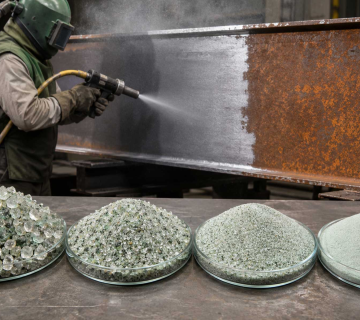
Grade Selection for Summer Applications: A Contractor’s Quick Reference
Choosing the right mesh grade of recycled glass abrasive is essential for matching your summer project requirements:
Application | Recommended Grade | Reason |
Bridge / structural steel blast | Coarse 10/20 | Aggressive rust and mill scale removal, 3–5 mil profile |
Marine hull / shipyard work | Medium 20/40 | Balanced speed and profile for marine coating prep |
Industrial equipment coating prep | Medium 20/40 | Versatile, consistent, most common contractor grade |
Concrete graffiti / facade cleaning | Fine 40/80 | Controlled removal without surface damage |
Automotive restoration | Fine 40/80 | Fine profile, no sheet metal warping risk |
Light rust / thin coating removal | Ultrafine 80+ | Minimal profile, gentle on substrate |
For most outdoor summer blasting projects — structural steel, infrastructure, and general industrial coating prep — the Medium 20/40 grade is the workhorse choice. For heavy rust on older structures or surfaces with thick coatings, upgrade to Coarse 10/20 for maximum productivity.
Summer Blasting Best Practices When Using Recycled Glass Abrasive
To get maximum performance from recycled glass abrasive in summer conditions, follow these field-tested practices:
- Blast in the morning — Steel surface temperatures are lowest in the early morning, reducing flash rust risk after blasting. Target a steel surface temperature at least 5°F above the dew point before blasting.
- Monitor the dew point — Use a digital dew point meter. If the ambient dew point is within 5°F of the steel surface temperature, do not blast. Moisture contamination before coating is a primary cause of coating system failure.
- Work in smaller sections — In summer heat, blast and coat in smaller sections to minimize the window between surface preparation and coating application. Glass abrasive’s fast cutting action supports this approach.
- Keep media dry — Store sacks of glass abrasive in a shaded, dry location on-site. While glass abrasive is not hygroscopic, wet media can affect blast consistency and equipment performance.
- Use the correct blast pressure — Excessive blast pressure with glass abrasive in high heat does not improve productivity; it increases dust generation and wear on equipment. Most applications perform best at 90–110 PSI.
- Maintain PPE discipline — Full respiratory protection, safety glasses or face shield, hearing protection, leather or heavy-duty gloves, and blast suit. In summer heat, rotate crews and enforce mandatory break schedules per OSHA heat illness prevention guidelines.
Environmental Responsibility: A Summer Advantage for Recycled Glass Abrasive
Summer outdoor blasting projects attract attention — from neighbors, regulatory agencies, and increasingly from project owners with sustainability requirements. Recycled glass abrasive supports responsible outdoor operations in several ways:
- No crystalline silica — eliminates the most regulated and health-hazardous component of blasting emissions
- Lower fine particulate generation — less airborne dust means less environmental impact and fewer neighbor complaints
- Made from post-consumer recycled glass — supports project owner ESG and sustainability goals
- Supports LEED project documentation — recyclable content and regional material sourcing from Zafa Glass Inc. in Lawrenceville, GA
For contractors working on public infrastructure projects, specifying recycled glass abrasive can also strengthen bid proposals by demonstrating environmental responsibility and alignment with sustainability specifications increasingly required in public procurement.
Why Contractors Are Switching to Zafa Glass Inc. This Summer
Zafa Glass Inc. has become a preferred supplier for blast contractors across the southeastern United States because of three core advantages:
- Product Consistency — All four mesh grades are produced to tight particle size specifications. Consistent media means consistent surface profiles, consistent blast times, and consistent coating adhesion outcomes on every job.
- Reliable Supply — Summer blasting season means high media demand. Zafa Glass Inc. maintains inventory for prompt fulfillment of both standard and bulk orders throughout the peak season.
- Technical Knowledge — The Zafa Glass team understands surface preparation. Whether you need grade selection guidance, SDS documentation for compliance files, or volume pricing for a large contract, Zafa Glass provides the support contractors need.
Conclusion: Make the Smart Media Choice This Blasting Season
Summer brings the year’s most demanding blasting conditions — and the year’s most significant compliance risk if you are still using silica sand. Recycled crushed glass abrasive solves the two biggest challenges of summer blasting simultaneously: it eliminates the crystalline silica hazard that OSHA targets most aggressively during construction season, and it delivers the consistent, high-performance surface preparation your coating systems demand.
Zafa Glass Inc. supplies recycled glass abrasive blasting media in four mesh grades — Coarse 10/20, Medium 20/40, Fine 40/80, and Ultrafine 80+ — from Lawrenceville, Georgia, with availability for contractors across the United States.