Recycled Crushed Glass Abrasive: A Complete Buyer’s Guide for Industrial Applications
📌 Quick Answer Recycled crushed glass abrasive is a silica-free, eco-friendly blasting media made from post-consumer glass. Available in four mesh grades — Coarse 10/20, Medium 20/40, Fine 40/80, and Ultrafine 80+ — it is used for surface preparation, rust removal, paint stripping, and industrial cleaning. It is OSHA-compliant and produces no free crystalline silica hazard. |
The global abrasive blasting industry is shifting — and recycled glass is at the center of it. With OSHA’s crystalline silica regulations tightening every year and sustainability pressures mounting across manufacturing and construction sectors, contractors are actively seeking media that is both high-performance and compliant. Recycled crushed glass abrasive checks every box — and this guide tells you exactly why.
What Is Recycled Crushed Glass Abrasive?
Recycled crushed glass abrasive is a high-performance blasting media manufactured from post-consumer glass — primarily bottles, windows, and flat glass. The glass is collected, cleaned, crushed, and classified into precise mesh grades, producing sharp-edged angular particles that are highly effective at removing surface contaminants and creating anchor profiles on steel, concrete, and other substrates.
Unlike conventional abrasives such as silica sand, copper slag, or coal slag, recycled crushed glass contains no free crystalline silica — the primary hazardous component behind silicosis, a fatal occupational lung disease. This single difference makes glass abrasive a game-changer for blast operators, safety managers, and project owners.
Zafa Glass Inc., based in Lawrenceville, Georgia, is a specialized supplier of recycled glass abrasive blasting media, providing industrial-grade crushed glass in four standard mesh grades to contractors and manufacturers across the United States.
How Is Recycled Crushed Glass Abrasive Made?
The production process for recycled glass abrasive is straightforward but precise:
- Collection & Sorting — Post-consumer glass is collected from recycling streams. Contaminants such as labels, metals, and ceramics are removed.
- Crushing & Processing — The clean glass is mechanically crushed into angular, irregular particles. This angular shape is critical — it creates the mechanical abrasion action needed for effective surface preparation.
- Screening & Grading — Crushed glass is passed through industrial mesh screens to classify particles by size. This produces the four standard mesh grades available from Zafa Glass Inc.
- Quality Control — Each batch is tested for consistency, cleanliness, and particle size distribution before packaging and shipment.
The result is a consistent, reliable abrasive media that can be used in standard blast equipment, including blast pots, pressure blasters, and suction systems — with no special modifications required.
Understanding the 4 Mesh Grades: Which One Do You Need?
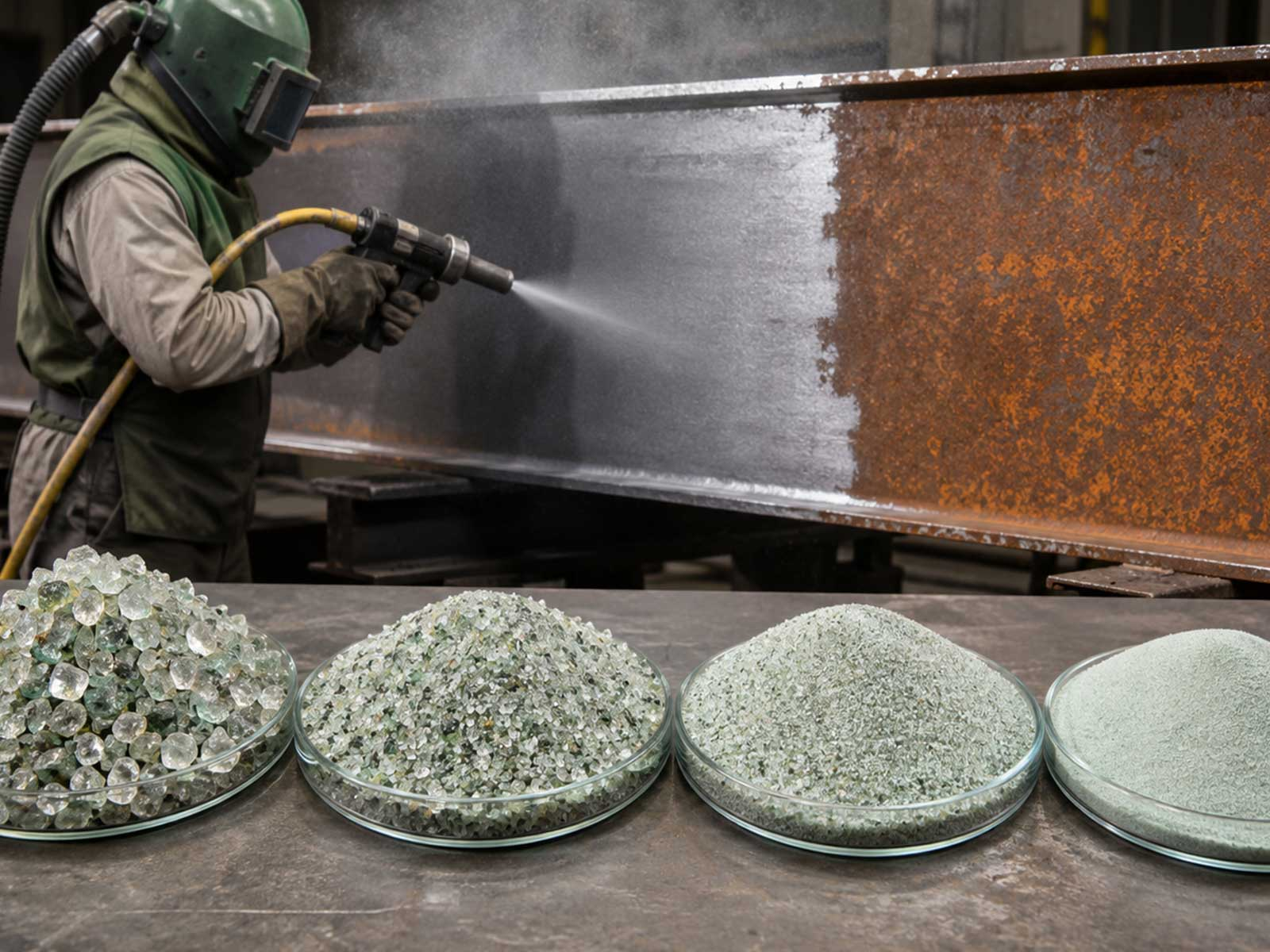
One of the most important decisions when purchasing recycled crushed glass abrasive is selecting the correct mesh grade. The grade determines the particle size, aggressiveness of the blast, and the surface profile (anchor pattern) achieved. Zafa Glass Inc. offers four grades:
Coarse 10/20 — Aggressive Surface Preparation
The Coarse 10/20 grade contains the largest particles and delivers the most aggressive blast action. It is ideal for:
- Heavy rust removal on structural steel
- Removing thick coatings, epoxy, or mill scale
- Preparing surfaces for heavy-duty industrial coatings
- Bridge and infrastructure blast cleaning
Surface profile achieved: 3–5 mil. Best for SSPC SP-10 Near-White Metal or SSPC SP-6 Commercial Blast.
Medium 20/40 — Versatile All-Purpose Grade
The Medium 20/40 grade is the most widely used glass abrasive grade in industrial applications. It delivers a balance of blast speed and surface finish. Applications include:
- General steel fabrication and coating prep
- Marine vessel hull cleaning
- Industrial equipment refurbishment
- Pipeline and valve surface preparation
Surface profile achieved: 1.5–3 mil. Suitable for most standard industrial coating systems.
Fine 40/80 — Precision Cleaning
The Fine 40/80 grade produces a finer surface profile and is suited for more delicate or detail-oriented applications:
- Automotive restoration and refinishing
- Architectural metalwork and decorative surfaces
- Graffiti removal from masonry and concrete
- Light rust removal without aggressive profiling
Surface profile achieved: 0.5–1.5 mil. Excellent where surface damage risk is a concern.
Ultrafine 80+ — Finishing & Light Duty
The Ultrafine 80+ grade is the finest option and is typically used for finishing work, light surface preparation, or applications where a very low surface profile is required:
- Glass etching and artistic surface work
- Light degreasing and surface cleaning
- Removing thin paint or light oxidation
- Precision industrial parts cleaning
Surface profile achieved: Under 0.5 mil. Not recommended for heavy-duty industrial coating prep.
Top Industrial Applications for Recycled Glass Abrasive
Recycled crushed glass abrasive is used across a wide range of industries and applications. Here is where contractors and manufacturers deploy it most:
Steel & Metal Surface Preparation
Surface preparation is the most common application for glass abrasive. Creating the correct anchor pattern — or surface profile — is essential for industrial coatings to bond properly. Glass abrasive’s angular particles mechanically abrade the surface, removing rust, mill scale, old paint, and other contaminants while leaving behind a clean, profiled surface ready for coating.
Concrete & Masonry Cleaning
Recycled glass abrasive is highly effective on concrete and masonry substrates. Contractors use it to remove graffiti, clean building facades, prepare concrete for overlays or coatings, and restore decorative stone surfaces. The silica-free composition also reduces the risk of silicosis from concrete dust, which is a critical safety consideration in enclosed or poorly ventilated work areas.
Marine & Shipyard Applications
The marine industry demands blasting media that can handle salt-contaminated, heavily corroded steel — and glass abrasive delivers. Shipyards and marine contractors use Medium 20/40 and Coarse 10/20 grades for hull blasting, ballast tank cleaning, and offshore structure maintenance. The low chloride content of recycled glass prevents salt contamination of the blasted surface, which is critical before applying marine coatings.
Automotive Restoration
Auto restoration shops and fleet maintenance operations favor the Fine 40/80 grade for removing rust, old paint, and undercoating from vehicle bodies and frames. The fine profile allows for clean, controlled blasting that doesn’t warp thin sheet metal — a common problem with coarser abrasives.
Oil & Gas Infrastructure
Pipeline operators and refinery maintenance contractors use recycled glass abrasive for valve body cleaning, pipe spool preparation, and internal vessel cleaning. The OSHA-compliant, silica-free composition is particularly valued in confined space applications where worker health risk is highest.
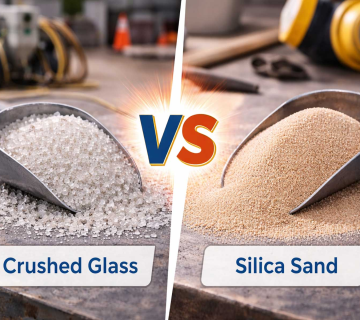
Recycled Glass Abrasive vs. Silica Sand: The Key Differences
Property | Recycled Glass Abrasive | Silica Sand |
Free Crystalline Silica | None — silica-free | High (up to 99%) |
OSHA Compliance | Fully compliant | Restricted / prohibited by many contractors |
Particle Shape | Angular — aggressive cutting action | Sub-angular — less efficient |
Reusability | Moderate recyclability | Single-use typically |
Environmental Profile | Made from recycled glass | Mined — environmental impact |
Dust Generation | Low | High — serious health hazard |
Surface Profile | Consistent, predictable | Variable, inconsistent |
Availability in USA | Available nationally | Restricted in some states |
The shift away from silica sand is not just regulatory — it is economic. Blast contractors who switch to recycled glass abrasive report faster job completion, fewer medical monitoring requirements, and elimination of costly OSHA silica compliance programs. For project owners, specifying silica-free media reduces liability and simplifies health and safety documentation.
Is Recycled Glass Abrasive OSHA Compliant?
Yes — and this is one of the most important buying considerations for contractors working under OSHA’s Respirable Crystalline Silica Standard (29 CFR 1926.1153 for construction and 29 CFR 1910.1053 for general industry).
Silica sand contains up to 99% free crystalline silica. When it is blasted, it generates fine respirable dust that causes silicosis — an incurable, progressive lung disease. OSHA’s silica rule requires engineering controls, medical surveillance, and exposure monitoring when crystalline silica is present above the action level of 25 μg/m³.
Recycled crushed glass abrasive contains no free crystalline silica. By switching to glass abrasive, contractors eliminate the primary silica exposure pathway and significantly reduce their OSHA compliance burden. No crystalline silica monitoring. No silica-specific medical surveillance. Simpler air quality management.
Zafa Glass Inc.’s products are manufactured with compliance in mind. Always review the Safety Data Sheet (SDS) for each product grade and follow standard blast safety protocols including respiratory protection, hearing protection, and personal protective equipment.
Sustainability & Environmental Benefits
Every ton of recycled glass abrasive used in blasting operations represents post-consumer glass diverted from landfill. With the EPA estimating that over 12 million tons of glass waste are generated annually in the United States — and less than 30% being recycled — the industrial use of recycled glass in abrasive blasting represents a meaningful contribution to the circular economy.
For project owners pursuing LEED certification, specifying recycled glass abrasive can contribute to LEED Material & Resources credits, particularly under the Construction and Demolition Waste Management and Regional Materials categories. Zafa Glass Inc. can provide documentation to support LEED submissions upon request.
- No mining or quarrying required — unlike silica sand, coal slag, or steel grit
- Carbon footprint significantly lower than manufactured abrasives
- Supports LEED, BREEAM, and other green building certification programs
- Contributes to corporate ESG and sustainability reporting goals
How to Buy Recycled Crushed Glass Abrasive: What to Look For
When evaluating suppliers, consider the following:
- Mesh Grade Consistency — Request particle size distribution certificates for each grade. Inconsistent grades lead to inconsistent surface profiles and poor coating adhesion.
- Silica Content Certification — Always request an SDS confirming zero or negligible free crystalline silica content.
- Availability & Lead Time — For production environments, ensure your supplier can meet ongoing volume requirements with reliable lead times.
- Technical Support — A knowledgeable supplier should be able to help you match the correct grade to your application, substrate, and coating specification.
- Sample Program — Reputable suppliers offer product samples so you can test performance before committing to bulk orders.
Zafa Glass Inc. offers samples and bulk orders of all four mesh grades, with shipping from Lawrenceville, Georgia. Contact the Zafa Glass team to discuss your project requirements.
Conclusion: The Smart Choice for Industrial Blasting
Recycled crushed glass abrasive is not just a trend — it is the future of responsible industrial surface preparation. It is OSHA-compliant, environmentally responsible, consistent, and effective across the full range of industrial blasting applications. Whether you are a blast contractor, a project engineer, or a procurement manager, understanding the grades, applications, and advantages of recycled glass abrasive will help you make smarter, safer, and more sustainable buying decisions.
Zafa Glass Inc. is one of the leading suppliers of recycled glass abrasive blasting media in the United States, offering four mesh grades with flexible ordering and technical support.